

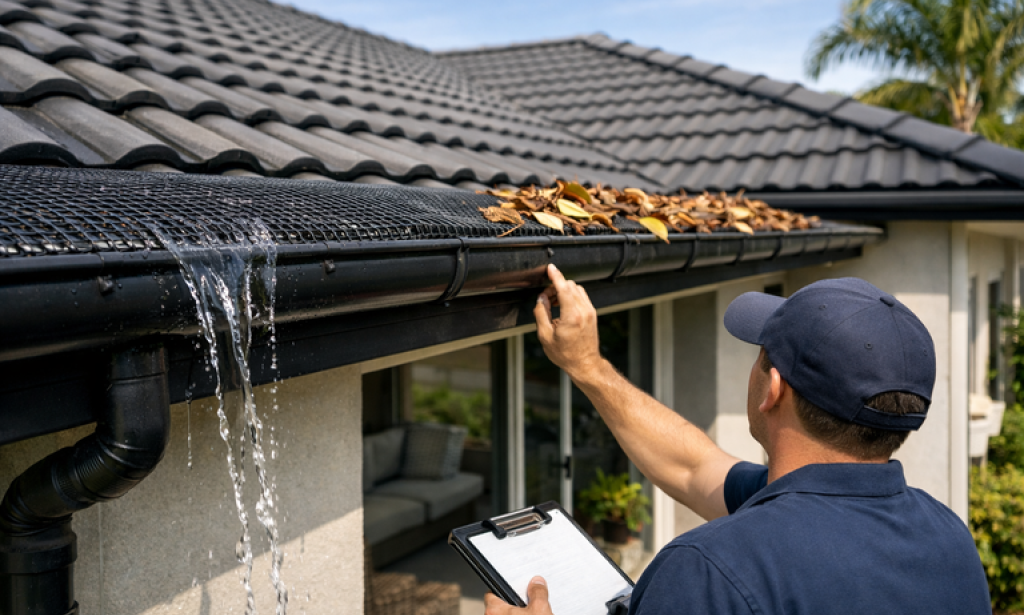
Many people install gutter guards believing they'll never have to think about their gutters again. It's an understandable assumption. After all, the name itself suggests complete protection against leaves and debris.
The reality is a little different.
Gutter guards can significantly reduce the amount of material entering your gutters, but they don't completely eliminate maintenance. Understanding what gutter guards can and can't do helps homeowners protect their property, avoid costly surprises, and get the most from their investment.
What Gutter Guards Actually Do
A gutter guard acts as a barrier that allows rainwater to enter the gutter while reducing the amount of leaves, twigs, seed pods, and larger debris that can cause blockages.
Instead of filling the gutter, most debris either stays on top until it's blown away or gradually breaks down over time.
This simple system offers several advantages:
- Less frequent gutter cleaning
- Improved water flow during rainfall
- Reduced risk of overflowing gutters
- Lower chance of birds nesting inside gutters
- Less organic matter sitting against the roofline
While these benefits are worthwhile, they don't make the gutter system maintenance-free.
The Biggest Misunderstanding
Many homeowners hear "gutter guard" and assume it means "never clean your gutters again."
Unfortunately, that's one of the biggest myths surrounding roof drainage systems.
Nature doesn't stop because a mesh or guard has been installed.
Small particles such as:
- Dust
- Pollen
- Flower petals
- Fine leaves
- Gum tree blossoms
- Moss fragments
- Roof grit
can still accumulate over time.
These materials gradually create a thin layer of organic matter that may affect water flow if left untouched for several seasons.
Every Property Is Different
The amount of maintenance required depends less on the gutter guard itself and more on the surrounding environment.
A home surrounded by mature trees will naturally collect more debris than one in an open residential estate.
Several factors influence how often inspections should take place:
Nearby Trees
Large deciduous trees produce leaves.
Native trees often drop bark, blossoms, seed pods and smaller debris throughout the year.
Roof Design
Complex rooflines with multiple valleys tend to collect more debris than simple roof designs.
Local Weather
High winds can carry leaves long distances.
Heavy rain can wash fine material onto the roof and into gutters.
Storms may also break branches that land directly on top of gutter guards.
Small Debris Still Matters
One advantage of gutter guards is that they stop larger blockages.
However, smaller particles behave differently.
Over time they can combine with moisture and gradually form a layer similar to compost.
Once that happens, weeds, moss or even small plants may begin growing if conditions remain damp for long enough.
Regular inspections help identify these problems before they become significant.
Overflow Can Still Happen
People often assume overflowing gutters mean the guard has failed.
That's not always the case.
Overflow can occur when:
- Debris builds up on top of the guard
- Downpipes become blocked further down
- Rainfall exceeds drainage capacity
- Gutters have incorrect fall
- Existing gutter damage restricts water flow
The gutter guard is only one part of the entire drainage system.
Everything else still needs to function properly.
Wildlife Doesn't Read Product Labels
Birds, insects and small animals don't avoid gutters because guards have been installed.
Some birds may build nests near roof edges.
Wasps occasionally build nests around rooflines.
Small insects can collect organic material over time.
A quick visual inspection every few months helps identify these issues before they interfere with drainage.
Seasonal Checks Make a Difference
Rather than waiting until problems appear, seasonal inspections help catch minor issues early.
A simple walk around the property can reveal:
- Leaves collecting in roof valleys
- Branches resting on gutters
- Visible sagging
- Overflow marks after rain
- Loose brackets
- Damaged downpipes
Most of these problems are easier to address while they're still small.
Roof Valleys Need Attention Too
Even when gutters remain relatively clear, roof valleys can become collection points.
Leaves often gather where two roof sections meet.
Eventually rainfall carries that material toward the gutter system.
Keeping roof valleys clear reduces the amount of debris reaching gutter guards in the first place.
Weather Events Can Change Everything
A perfectly clean gutter system today may look very different after one severe storm.
Strong winds can drop large branches.
Heavy rainfall can wash unexpected debris onto roofs.
That's why inspections after major weather events are worthwhile, even if gutter guards are installed.
Don't Forget the Downpipes
Water leaves the roof through the gutters, but it finishes its journey through the downpipes.
If a downpipe becomes blocked, water has nowhere to go.
Signs of downpipe problems include:
- Water overflowing from one section only
- Slow drainage after rain
- Water backing up inside gutters
- Damp patches around the base of walls
Checking the complete drainage system provides a much clearer picture than focusing only on the gutter itself.
Choosing Prevention Over Repairs
Water damage often develops slowly.
Small overflows may go unnoticed for months.
Over time they can affect:
- Fascia boards
- Exterior walls
- Foundations
- Landscaping
- Outdoor entertaining areas
Routine inspections help reduce the likelihood of these issues developing into expensive repairs.
A Practical Maintenance Routine
A simple maintenance routine doesn't require much effort.
Consider:
- Looking at the roof after major storms
- Checking gutters each season
- Removing visible debris sitting on top of guards
- Watching for overflow during heavy rain
- Keeping nearby tree branches trimmed where appropriate
These small habits often prevent much larger maintenance problems later.
The Bottom Line
Gutter guards are a valuable addition to many homes because they reduce debris build-up and minimise maintenance requirements.
However, they aren't designed to eliminate maintenance altogether.
Like any part of a home, gutters perform best when they're inspected regularly and small issues are addressed before they become larger ones.
A little attention throughout the year helps keep rainwater flowing properly and supports the long-term health of the entire roof drainage system.
This post is written by the GutterFlow editorial team, sharing practical home maintenance advice to help homeowners protect their properties.

You must be logged in to post a comment.