

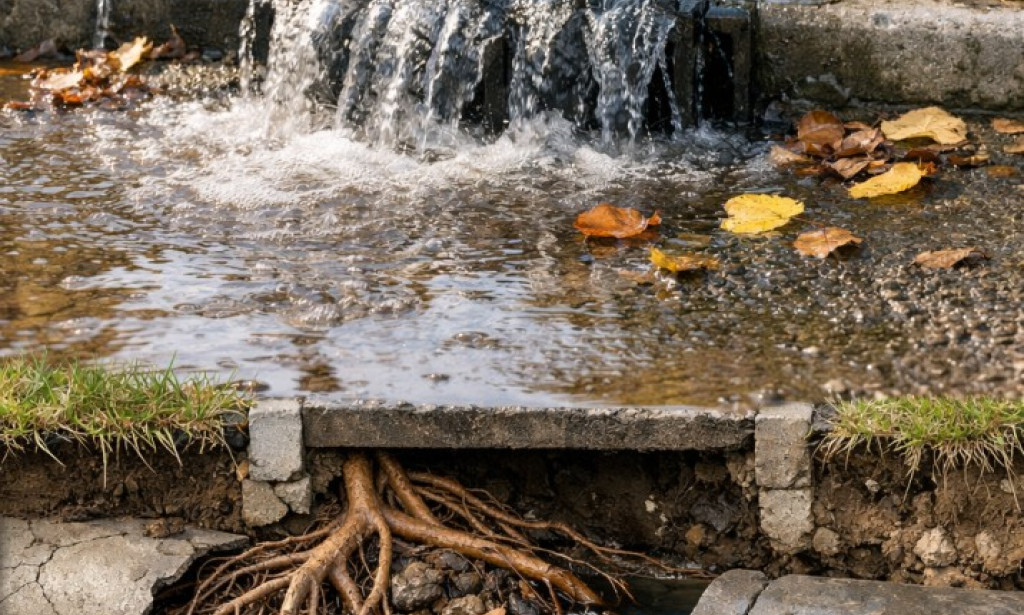
Most people assume stormwater drains only become a problem during heavy rain. It seems logical. More rain means more water, and more water increases the chance of overflowing drains. Yet many property owners are surprised to discover water pooling around outdoor drains on sunny days, damp patches appearing in the garden during dry weather, or strange smells coming from stormwater pits long after the rain has passed.
These situations rarely happen without a reason. In fact, an overflowing stormwater drain during dry conditions is often a sign that something beneath the surface has been developing for quite some time. Waiting for the next downpour usually makes the situation worse, not better.
Stormwater systems work quietly in the background. Unlike kitchen sinks or bathroom drains, they're easy to forget because they're used less often. But every season brings a fresh collection of leaves, soil, small branches, roof debris, and garden waste that slowly makes its way into the drainage system. Add a few years of neglect, and even a well-built drainage network can begin showing signs of trouble.
Understanding why these problems happen can help property owners spot early warning signs before a minor issue turns into extensive water damage.
Stormwater Drains Do More Than Most People Realise
A stormwater drainage system has one simple job. It collects rainwater from roofs, driveways, pathways, patios, and gardens before directing it safely away from the property. When everything is working properly, thousands of litres of water can move through the system without attracting any attention.
The problem is that stormwater drains are exposed to the outdoors every single day. Unlike indoor plumbing, they constantly deal with leaves, dirt, mulch, gravel, bird nests, seeds, moss, and whatever the wind decides to carry into gutters and drain grates.
Every season leaves something behind. Autumn fills drains with leaves, spring brings blossoms and pollen, while storms often carry mud and branches that settle deep inside underground pipes. None of these things cause an immediate blockage on their own. Instead, they slowly build layer upon layer until water no longer flows as freely as it should.
Many people only notice the issue after seeing puddles that refuse to disappear or water backing up from outdoor drain pits.
Overflow Doesn't Always Mean Heavy Rain
One common misunderstanding is that overflowing stormwater drains are caused only by extreme weather. While intense rainfall certainly puts pressure on the system, blockages usually begin months before the first overflow occurs.
Imagine pouring water through a drinking straw that's partially blocked. Water still passes through, but much more slowly. The same thing happens inside drainage pipes. Small restrictions reduce the flow capacity little by little until even a moderate amount of water becomes too much for the system to handle.
That's why some properties experience flooding during ordinary showers while neighbouring homes remain completely unaffected.
Leaves Are Only Part of the Story
Leaves receive most of the blame, but they rarely create problems on their own.
Once leaves settle inside underground drains, they begin trapping other materials passing through the system. Dust sticks to damp surfaces. Small stones collect around the edges. Seeds begin sprouting. Fine roots search for moisture. Before long, what started as a handful of leaves has become a compact obstruction that continues growing each season.
This process happens slowly enough that property owners often don't realise anything is wrong until significant restrictions have already formed.
Tree Roots Often Go Unnoticed
Healthy trees can have root systems extending well beyond their visible canopy. Their roots naturally seek moisture, making underground drainage pipes an attractive source.
A tiny crack or loose pipe joint may be all that's needed for a root to enter.
Once inside, the environment provides everything required for growth. Constant moisture and nutrient-rich water encourage roots to expand until they occupy a surprising amount of space inside the pipe.
Unlike ordinary debris, roots don't wash away during heavy rain. They continue growing until the blockage becomes severe enough to affect drainage performance throughout the property.
Many recurring stormwater problems eventually trace back to root intrusion that remained hidden for years.
Small Pipe Damage Can Create Bigger Problems
Underground pipes are built to last, but no drainage system remains perfect forever.
Ground movement, ageing materials, nearby construction, heavy vehicles, or natural soil settlement can all place pressure on buried pipes. Small cracks may seem insignificant at first, yet they allow surrounding soil to enter while giving roots an opportunity to grow inside the drainage system.
Even slight changes in pipe alignment can create low points where sediment begins collecting. Every rainfall adds another thin layer until water flow gradually becomes restricted.
Without inspecting the pipe internally, these issues often remain invisible.
Gutters Play a Bigger Role Than Many Expect
Stormwater drains depend heavily on clean gutters.
When gutters become blocked, rainwater carries concentrated debris directly into downpipes. Instead of flowing freely through the drainage system, leaves, twigs, roof grit, moss, and organic material travel together until they reach underground pipes.
Regular gutter cleaning does more than protect the roof. It reduces the amount of debris entering the stormwater network in the first place.
Ignoring gutters for several seasons often creates drainage problems that appear unrelated but actually begin much higher up.
Early Warning Signs Are Easy to Miss
Stormwater drainage problems rarely appear overnight. Most systems provide subtle warnings long before complete failure occurs.
You may notice puddles remaining in the same area for several days after light rain. Water might drain away more slowly than before, or outdoor drain pits may develop unpleasant smells. Sometimes the lawn stays unusually wet even during dry weather. In other cases, small amounts of water begin appearing around inspection openings or drain grates.
Individually, these signs may not seem urgent. Together, they usually indicate that water is struggling to move through the drainage system efficiently.
Addressing these symptoms early often prevents far more disruptive repairs later.
Why Temporary Fixes Rarely Last
It's tempting to remove visible leaves from a drain grate and assume the problem has been solved. Unfortunately, the obstruction causing the overflow is often much deeper inside the pipe.
Chemical drain cleaners are another common solution people reach for. While they may help with certain indoor drains, they're generally ineffective against compacted outdoor debris, tree roots, or accumulated sediment inside stormwater systems.
Repeatedly treating the symptoms without identifying the underlying cause often leads to the same blockage returning every few months.
Preventative Maintenance Makes a Difference
The easiest drainage problems to solve are the ones that never become emergencies.
Keeping gutters clean, removing leaves from drain grates, trimming vegetation around drainage points, and paying attention to slow drainage all contribute to a healthier stormwater system.
Properties surrounded by mature trees usually benefit from more frequent inspections because organic material enters the drainage network throughout the year rather than during a single season.
Routine maintenance doesn't simply improve drainage performance. It also helps extend the life of underground pipework by reducing unnecessary pressure on the system.
Don't Ignore Water Where It Shouldn't Be
Water always leaves clues.
A damp patch that never dries, soil washing away after ordinary rainfall, mould appearing near external walls, or standing water around outdoor drains are all signs worth investigating.
Stormwater systems are designed to move water away from a property quickly. When that stops happening, it's usually because something inside the drainage network has changed.
Finding the cause early is almost always easier than dealing with the damage that develops when the problem is ignored.
Final Thoughts
Stormwater drains spend most of their life unnoticed, quietly carrying rainwater away from homes and businesses. Because they're hidden underground, it's easy to forget they need attention too. Overflowing drains, lingering puddles, and persistent damp areas are rarely random events. More often than not, they're signs that debris, root intrusion, pipe movement, or gradual build-up has been restricting the system for months or even years.
Looking beyond the obvious symptoms and dealing with the underlying cause helps protect the drainage system and reduces the likelihood of unexpected flooding in the future. A little attention today can prevent a much bigger problem after the next heavy rainfall.
This post was written by https://expressdraincleaning.com.au/ based in Sydney.

You must be logged in to post a comment.